

Choosing between exterior repair or replacement in Fort Collins is rarely just an age question. A twenty-year-old material may still be performing well in one area while a newer section has failed because of impact, moisture or an installation detail. The useful decision comes from condition, spread and how the affected materials connect.
Start with the problem you need to solve. Are you stopping a leak, improving comfort, correcting visible damage or planning a larger remodel? A clear goal makes it easier to compare a focused repair with a broader replacement scope.
When a Focused Exterior Repair May Make Sense
Repair is often worth considering when damage is limited, the surrounding material is still sound and a compatible replacement material is available. A small area of lifted siding, isolated flashing failure or damaged deck boards may not justify replacing everything around it.
The key question is whether the repair can restore performance without creating a weak transition. A neat-looking patch can still fail if water continues to enter behind it or if the surrounding material is too brittle to work with safely.
Signs the Problem May Be More Widespread
Replacement deserves a closer look when failures repeat across several areas, materials have become fragile or repairs no longer hold. It may also make sense when several components are reaching the end of their useful life and doing the work together would avoid opening the same area twice.
Look for patterns rather than one isolated symptom:
- Leaks appearing in more than one room or after different weather conditions.
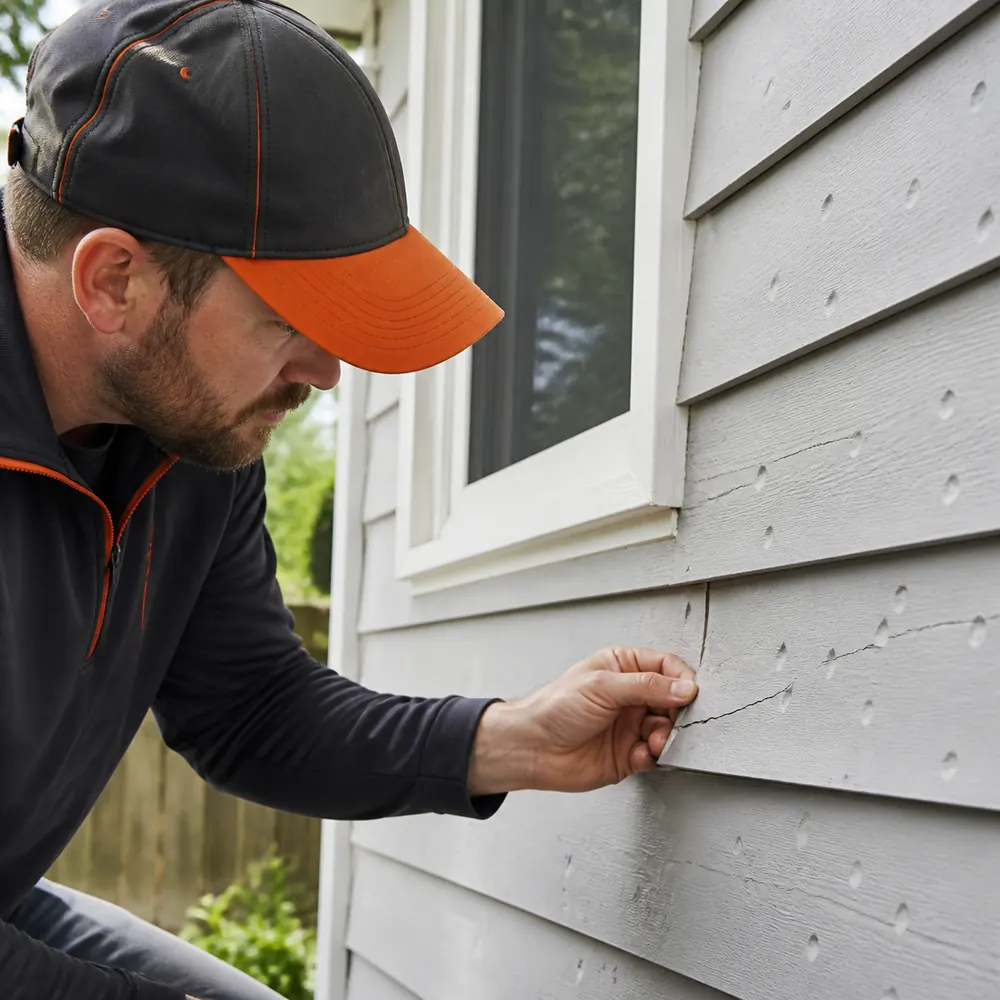
- Siding that is cracked, loose or distorted across several elevations.
- Windows with widespread seal failure, frame damage or persistent drafts.
- Deck boards, rails and connections showing movement in several locations.
- Repeated moisture staining or soft material behind prior repairs.
Plan the Connections Before Choosing Materials
Exterior systems meet at roof edges, wall corners, window openings, door thresholds and deck ledgers. Those transitions often determine whether a project performs well after the visible finish is complete.
For example, replacing siding may be the right time to correct window flashing or inspect sheathing. A roof project may affect gutters, wall flashing or a covered deck connection. New windows may require trim and siding work to create a reliable opening.
This does not mean every project needs to become larger. It means the estimate should acknowledge the relationships before construction starts.
Compare the Decision, Not Just the Price
A lower initial price can be the right answer when the repair is durable and the surrounding material has useful life left. It can be poor value when the same area is likely to be opened again soon.
Ask each contractor to explain:
- What condition is causing the visible problem?
- How far does the affected area appear to extend?
- What adjoining materials need to be protected or removed?
- Can the existing finish be matched closely enough?
- What could change once the area is opened?
- Would sequencing related work now reduce future disruption?
Also consider how long you expect to stay in the property and whether another exterior project is already being planned. Coordinating windows, siding or roofing can reduce repeated setup and help adjoining details work together. That does not automatically make a larger project the right choice, but it belongs in an honest comparison.
Build a Scope You Can Understand
Northstar Exterior helps Fort Collins property owners review roofing, siding, windows, decks and structural concerns as parts of one exterior. You can compare repair and replacement options with a clearer understanding of the affected area and the work around it.
Explore siding repair and replacement, or contact Northstar Exterior to discuss what you are seeing at the property.